
Your Website AI Data Structure Checklist
How to Map Structured Data for Search & AI.
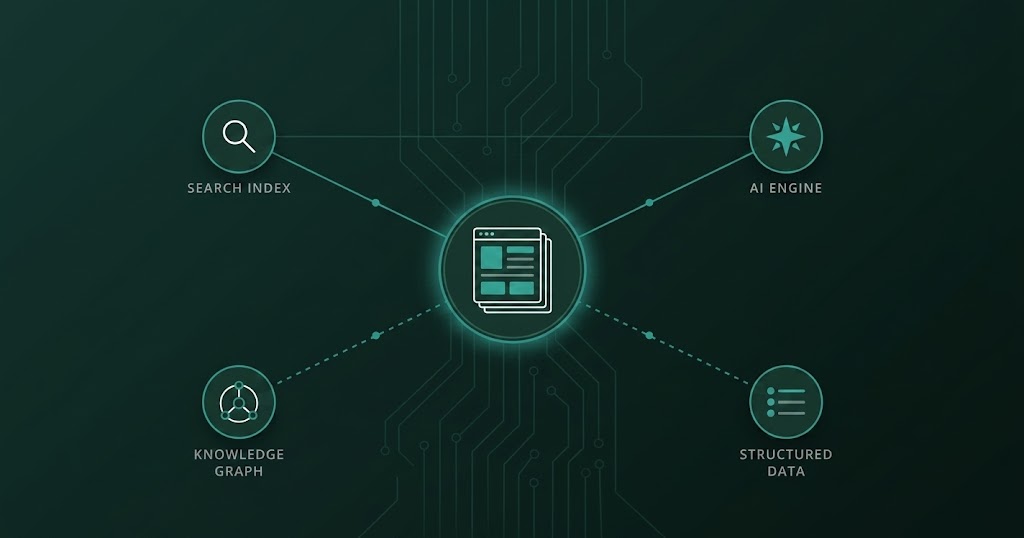
Search engines and AI models do more than read the words on your website – they look at how your information connects together. If your site does not use structured data (JSON-LD), you miss out on better search rankings, credibility, and extra visibility.
Here is a practical checklist for evaluating your site’s architecture and mapping the right schemas to the right content types.
If you’d like to better understand how structured data prepares your business for the AI-First web, we have a helpful Beyond The Search Bar guide.
Step 1: Audit & Identify Your Core Content Types
Before changing your website, break it down into its main page types. Most business websites use five basic types:
- Company Basics: Your homepage, about page, and contact page.
- Services & Products: Main service overview pages and individual service pages.
- Examples & Evidence: Case studies, portfolio pieces, and customer results.
- Articles & News: Blog posts, guides, and industry updates.
- Category Lists: Pages that group articles or topics together.
Step 2: Choose the Right Labels for Each Page Type
After identifying your page types, use standard Schema labels to tell search engines and AI what each page represents:
- Homepage → Business Profile & Main Site Info
Goal: Clear guidance on your company name, logo, location, and primary areas of expertise so search tools recognise who you are. - Services Overview → Service List & Directory
Goal: Act as an organised catalogue that introduces search crawlers to all the individual services you offer. - Individual Service Pages → Specific Service Details
Goal: Describe specific offerings and regions served, directly connecting each service back to your main business profile. - Case Studies & Portfolio → Works & Articles
Goal: Showcase real results while linking directly to team member profiles to build trust and authority. - Blog Posts & Articles → Article & Publishing Info
Goal: Highlight publication dates, topics covered, and verified author details to confirm human expertise. - Site Navigation → Navigation Trail
Goal: Help search engines understand how your pages link together across your site structure using clear breadcrumbs.
Step 3: Test and Clean Up Your Setup
- Connect Your Information: Make sure all your pages and details link back to your main business profile so everything works together.
- Keep It Simple: Remove extra, unnecessary code that slows down your website without providing real value.
- Test Everything: Run your pages through Schema.org’s Validator and Google’s Rich Results Test to ensure there are no errors or warnings.
Ready to Upgrade Your Site’s Knowledge Graph?
Let’s work together to turn your website into an exceptionally powerful digital hub for your business.

